
Office Ergonomics Checklist: How to Build a Comfortable and Productive Workspace
Table of Contents
An office ergonomics checklist is often treated as something you complete once and forget. In reality, ergonomics is an ongoing process of adapting your workspace to your body, your daily tasks, and even changes in your equipment or work habits.
Poor workstation setup doesn’t always cause immediate pain. More often, discomfort develops gradually through thousands of small movements repeated every day. A monitor that’s slightly too low encourages neck flexion. A keyboard that’s positioned too far away causes the shoulders to round forward. Sitting with inadequate lumbar support places continuous stress on the lower back. Individually, these issues may seem minor, but together they can contribute to muscle fatigue, reduced concentration, and repetitive strain injuries over time.
A well-designed workstation allows your body to remain in a neutral posture for much of the day. Your muscles work less to maintain alignment, joints experience less unnecessary stress, and movements become more efficient. As a result, many people notice not only greater physical comfort but also improved focus, fewer interruptions caused by discomfort, and better productivity during long work sessions.
Rather than viewing ergonomics as a collection of isolated adjustments, think of your workstation as a system in which every component, from your chair to your monitor height, works together to support healthy movement.
1. Start With Your Chair Before Adjusting Anything Else
The chair forms the foundation of an ergonomic workstation because nearly every other adjustment depends on your seated position. If the chair height is incorrect, it becomes difficult to properly position the desk, monitor, keyboard, and mouse.
Begin by adjusting the chair so your feet rest flat on the floor while your knees remain approximately level with or slightly below your hips. This position helps distribute weight evenly and reduces pressure beneath the thighs. If your desk is too high to achieve this position comfortably, a footrest can provide support without compromising the height needed for your arms.
Lumbar support deserves equal attention. The natural inward curve of the lower spine should remain supported rather than flattened against the chair. Many ergonomic chairs include adjustable lumbar supports, while others may benefit from a dedicated lumbar cushion. Supporting this curve helps reduce muscular effort and encourages healthier sitting posture throughout the day.
Seat depth also affects comfort. Ideally, there should be a small gap between the edge of the seat and the back of your knees. A seat that’s too deep restricts circulation and encourages slouching, while one that’s too shallow fails to support the thighs adequately.
Finally, adjust the armrests so they lightly support your forearms without forcing your shoulders upward. Armrests that are too high create unnecessary shoulder tension, while those that are too low provide little benefit.
2. Position Your Desk Around Natural Arm Movement

Once your chair is properly adjusted, the desk should accommodate your natural arm position instead of forcing your body to adapt.
When your hands rest on the keyboard, your elbows should remain close to your sides at roughly a 90-degree angle. Your forearms should stay close to parallel with the floor, allowing your wrists to remain straight rather than bending upward or downward.
Desk height affects much more than typing comfort. A surface that’s too high often leads people to elevate their shoulders for hours at a time, creating tension throughout the neck and upper back. A desk that’s too low encourages slouching and excessive forward lean, placing additional strain on the spine.
If your desk height isn’t adjustable, modifying your chair height and using accessories such as a footrest or keyboard tray can often achieve a more ergonomic working position.
3. Place Your Monitor Where Your Neck Can Stay Neutral
Monitor placement has one of the greatest influences on neck and upper-back comfort. Even a small amount of repeated neck flexion can contribute to muscular fatigue over an entire workday.
The top of the display should generally align with or sit slightly below eye level, allowing your eyes to naturally fall toward the center of the screen without excessive bending of the neck. The monitor should also remain approximately an arm’s length away, although the ideal viewing distance depends on screen size and your vision.
People who use multiple monitors should think carefully about screen placement. If one display is used almost exclusively, position it directly in front of you and place the secondary monitor to the side. However, if both monitors receive equal use throughout the day, centering them together with the gap directly in front of your body minimizes repetitive neck rotation.
Laptop users face a unique challenge because the keyboard and display are attached. Raising the laptop improves monitor height but makes the keyboard uncomfortable to use, while lowering it improves typing posture at the expense of neck alignment. An external keyboard and mouse solve this compromise by allowing the screen and input devices to be positioned independently.
4. Keep Your Keyboard and Mouse Within Easy Reach
The keyboard and mouse should encourage relaxed, efficient movement rather than forcing constant reaching.
Place the keyboard directly in front of your body so your wrists remain straight while typing. Many people benefit from keeping the keyboard slightly lower than expected, allowing their shoulders to relax naturally. Wrist rests can provide comfort during pauses but shouldn’t be used to support the wrists continuously while typing, as constant pressure may compress sensitive tissues.
The mouse should remain immediately beside the keyboard to minimize shoulder abduction. Reaching repeatedly across the desk to use a mouse increases muscular workload in the shoulder and upper arm, particularly during prolonged computer use.
If you frequently alternate between keyboard shortcuts and mouse input, consider rearranging desktop accessories so both devices remain within your primary reach zone. Reducing unnecessary movement throughout the day can significantly improve long-term comfort.
5. Optimize Lighting to Reduce Eye Strain
Office ergonomics extends beyond furniture. Lighting has a substantial impact on visual comfort, fatigue, and concentration.
Natural light is generally beneficial, but direct sunlight striking the monitor often creates glare that encourages awkward head positions as people try to see the screen more clearly. Positioning the monitor perpendicular to windows usually provides the best balance between daylight and screen visibility.
Artificial lighting should illuminate the workspace evenly without producing excessive brightness or harsh reflections. If task lighting is necessary, position adjustable lamps so they illuminate documents rather than reflecting directly into your eyes or onto the monitor.
Display settings also deserve attention. Brightness should roughly match the surrounding environment, while text size should be large enough to read comfortably without leaning forward.
6. Standing Desks Work Best When Used Correctly
Standing desks have become increasingly popular, but standing all day isn’t inherently healthier than sitting all day. Ergonomics emphasizes movement and variation rather than replacing one static posture with another.
When standing, adjust the desk so your elbows maintain the same relaxed angle recommended for seated work. The monitor should remain at eye level, and your wrists should stay straight while typing.
Supportive footwear becomes more important during standing work sessions, particularly on hard flooring. Many users also benefit from anti-fatigue mats, which encourage subtle leg movement and reduce pressure on the feet.
Alternating between sitting and standing every 30 to 60 minutes often provides greater benefits than remaining in either position for extended periods. The goal isn’t simply to stand more but to reduce prolonged static postures altogether.
7. Organize Frequently Used Items Within Your Reach Zone
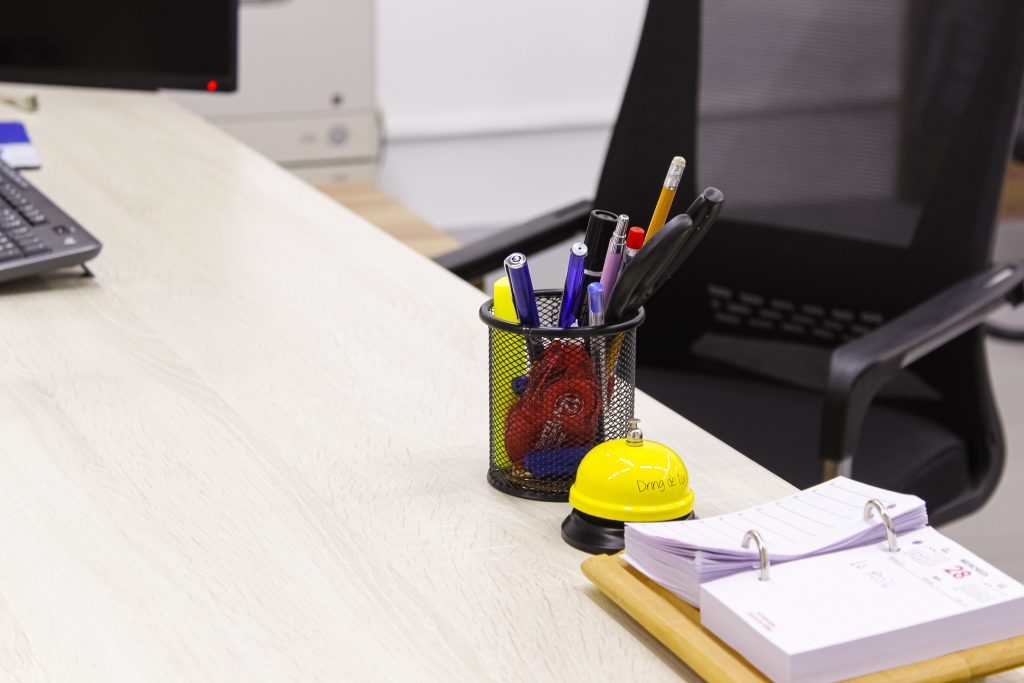
A workstation’s layout influences how much unnecessary movement occurs throughout the day.
Items used constantly, such as the keyboard, mouse, notebook, or phone, should remain within easy reach without requiring you to lean forward or twist your torso. Objects used less frequently can occupy secondary areas of the desk without affecting daily comfort.
Document holders positioned beside the monitor can reduce repetitive head movement when working from printed materials. Headsets are another worthwhile investment for employees who spend significant time on calls, preventing the common habit of trapping a phone between the shoulder and ear.
A clutter-free workspace also supports ergonomics by allowing your equipment to remain properly positioned instead of shifting to accommodate unrelated items.
8. Healthy Movement Matters More Than Perfect Posture
One of the biggest misconceptions about office ergonomics is that there’s a single perfect sitting posture. The human body isn’t designed to remain completely still for eight hours, regardless of how well a workstation is adjusted. Even an ideal posture becomes uncomfortable if maintained continuously.
Changing positions throughout the day encourages circulation, reduces muscle fatigue, and distributes physical loads across different tissues. Standing briefly, walking during phone calls, stretching between meetings, or simply changing your sitting position periodically can provide meaningful relief.
Short movement breaks don’t need to interrupt productivity. Even one or two minutes of walking or gentle stretching every hour can help counteract the effects of prolonged sitting.
Reevaluate Your Workspace as Your Needs Change
An effective office ergonomics checklist isn’t something you complete once and file away. Your workstation should evolve alongside your work habits, equipment, and physical needs.
A new chair, larger monitor, different keyboard, or hybrid work arrangement can all change the way your body interacts with your workspace. Even seasonal changes, such as different footwear or thicker clothing, can subtly affect sitting posture and desk height.
Reassessing your workstation every few months allows you to identify small issues before they develop into persistent discomfort. Paying attention to recurring aches, muscle fatigue, or changes in posture often provides valuable clues that an adjustment is needed.
Treating ergonomics as an ongoing process rather than a one-time project helps create a workspace that continues to support both comfort and productivity. An office ergonomics checklist serves as a practical framework for making thoughtful adjustments over time, ensuring that your workstation adapts as your work and your body change.