Standing Desk Benefits: What Actually Improves (And What Doesn’t)
Table of Contents
Most discussions around standing desk benefits are overly simplified. You’ll see the same claims repeated—better posture, less back pain, more energy—but rarely any explanation of why those changes happen or when they don’t.
A standing desk doesn’t fix problems on its own. What it does is change how your body interacts with your workspace. That shift creates opportunities for improvement, but only if the setup and usage are correct. Without that, you can easily replace one set of issues with another.
To understand the real value of standing desks, you need to start with what prolonged sitting actually does to the body.
Why Sitting All Day Creates Problems in the First Place
The core issue with sitting isn’t just the position—it’s the lack of variation. When you remain seated for long periods, your body gradually shifts into a low-effort state. The muscles that support your spine, particularly your core and lower back, become less active. Over time, this leads to a pattern where your posture collapses forward and the load shifts away from muscles and onto passive structures like ligaments and discs. This is why discomfort builds slowly. It’s not one moment of bad posture—it’s hours of reduced engagement.
Circulation also plays a role. Sitting reduces movement, which slows blood flow, especially in the lower body. That familiar afternoon sluggishness isn’t just mental fatigue—it’s partly physiological. When your body is inactive, your energy levels tend to follow.
Standing changes both of these factors. It increases baseline muscular engagement and encourages more subtle movement. Even small adjustments—shifting weight, repositioning your stance—help maintain circulation and reduce the stagnation that comes from prolonged sitting.
Core Standing Desk Benefits
Posture Improvement
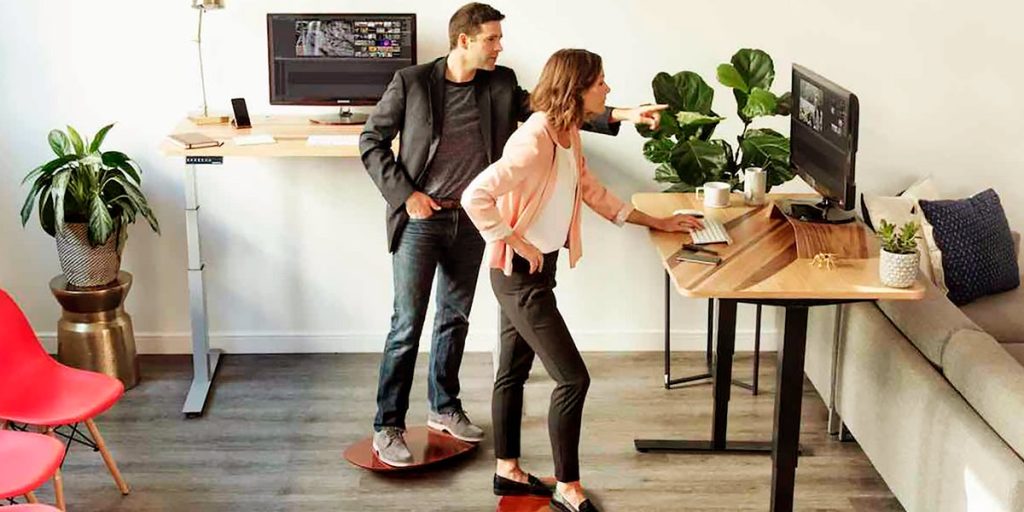
One of the most cited standing desk benefits is improved posture, but this only happens under specific conditions. Standing encourages a more neutral spine position because it reduces the tendency to slump forward. However, if the desk height is incorrect or the screen is poorly positioned, users can still develop poor posture while standing.
The real benefit is not automatic correction, but the opportunity for better alignment. When the workstation is set up correctly, standing makes it easier to maintain a balanced posture with less conscious effort.
Reduction in Back Pain
Standing desks are often recommended for back pain, but the mechanism is frequently misunderstood. Back pain from sitting is typically caused by prolonged compression and lack of movement. Standing reduces this compression and redistributes the load across different muscle groups. This change can relieve discomfort, particularly in the lower back.
However, standing for too long without movement can create a different type of strain. The benefit comes from variation—switching positions rather than replacing one static posture with another.
Increased Energy and Reduced Fatigue
Many users report feeling more alert when using a standing desk. This is not because standing is inherently energizing, but because it reduces the passive state associated with prolonged sitting. Standing requires a baseline level of muscular engagement, which keeps the body more active. This can help prevent the dips in energy that often occur during long periods of seated work.
Productivity and Focus
The connection between standing desks and productivity is subtle but real. Standing can improve focus by reducing physical discomfort and encouraging a more engaged posture. However, the effect is not universal. Tasks that require intense concentration may still benefit from sitting.
The advantage lies in flexibility. Being able to switch positions allows users to match their physical state to the type of work they’re doing.
Standing vs Sitting Desk
One of the biggest misconceptions is that standing desks dramatically increase calorie burn. While standing does use slightly more energy than sitting, the difference is relatively small. It’s not enough to meaningfully impact weight on its own. The more important distinction is between inactivity and movement. Sitting tends to lock you into a static position, while standing makes it easier to shift, adjust, and move throughout the day. That subtle increase in movement has a greater impact than the calorie difference itself.
This is also why standing all day isn’t the goal. Static standing can lead to fatigue in the feet, legs, and lower back. The real benefit comes from alternating between sitting and standing, allowing different muscle groups to engage and recover. When used correctly, a standing desk isn’t about choosing one position over the other—it’s about avoiding being stuck in either.
How to Use a Standing Desk Properly
Most issues people experience with standing desks come down to usage, not the desk itself.
Finding the Right Standing-to-Sitting Ratio
There is no universal ratio, but a common starting point is alternating every 30 to 60 minutes. The goal is to avoid staying in one position long enough to create discomfort. Over time, users naturally find a rhythm that works for them. The key is consistency rather than strict adherence to a schedule.
Proper Desk and Monitor Positioning
A poorly set-up standing desk can negate its benefits entirely. The desk should be at elbow height, allowing the arms to rest comfortably without raising the shoulders. The monitor should be positioned at eye level to prevent neck strain. These adjustments ensure that standing promotes better alignment rather than introducing new issues.
Encouraging Movement Throughout the Day
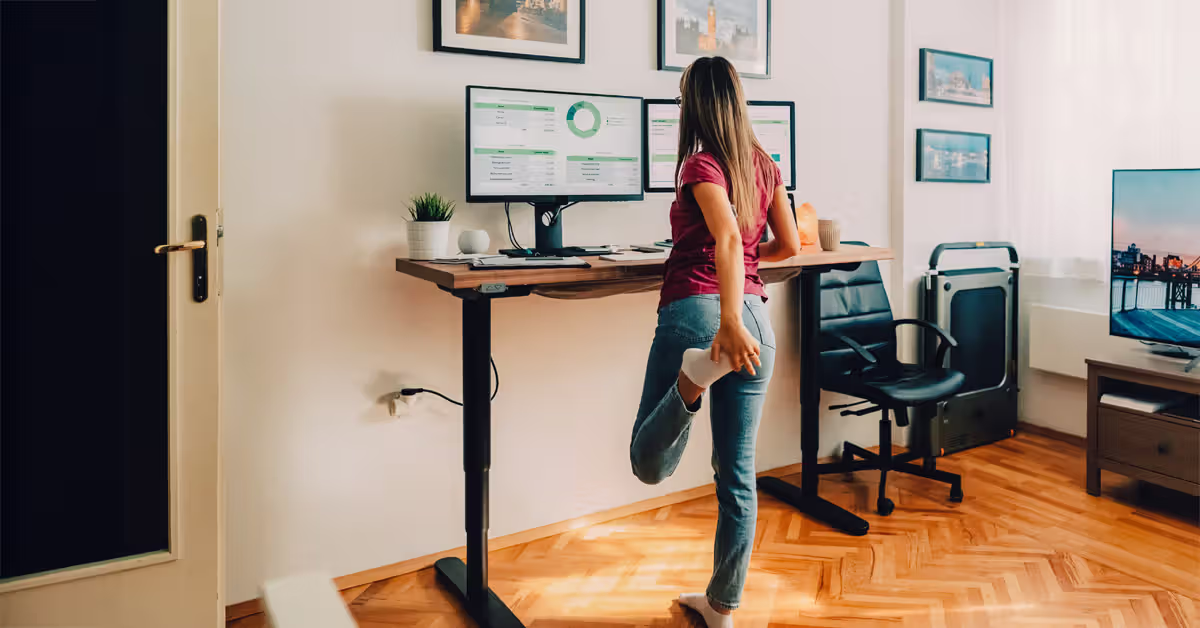
Standing desks work best when they encourage movement. Shifting weight, taking small steps, or adjusting stance helps prevent fatigue and improves circulation. The goal is not to stand still, but to remain active in subtle ways.
When Standing Desks Cause Problems
Standing desks are often positioned as a solution, but they can just as easily create problems if used incorrectly.
The most common issue is overstanding. New users often assume that more standing equals better results, which leads to fatigue in the feet, knees, and lower back. This is especially noticeable when standing on hard surfaces without support.
Another issue is a poor setup. If the desk height or monitor position is off, standing can actually encourage worse posture than sitting. Instead of slouching into a chair, users end up leaning forward or locking their knees, both of which create strain.
There’s also an adaptation period that many people overlook. Standing uses muscles differently from sitting, so some initial discomfort is normal. The problem arises when users push too far too quickly instead of gradually building tolerance.
Are Standing Desks Worth It?
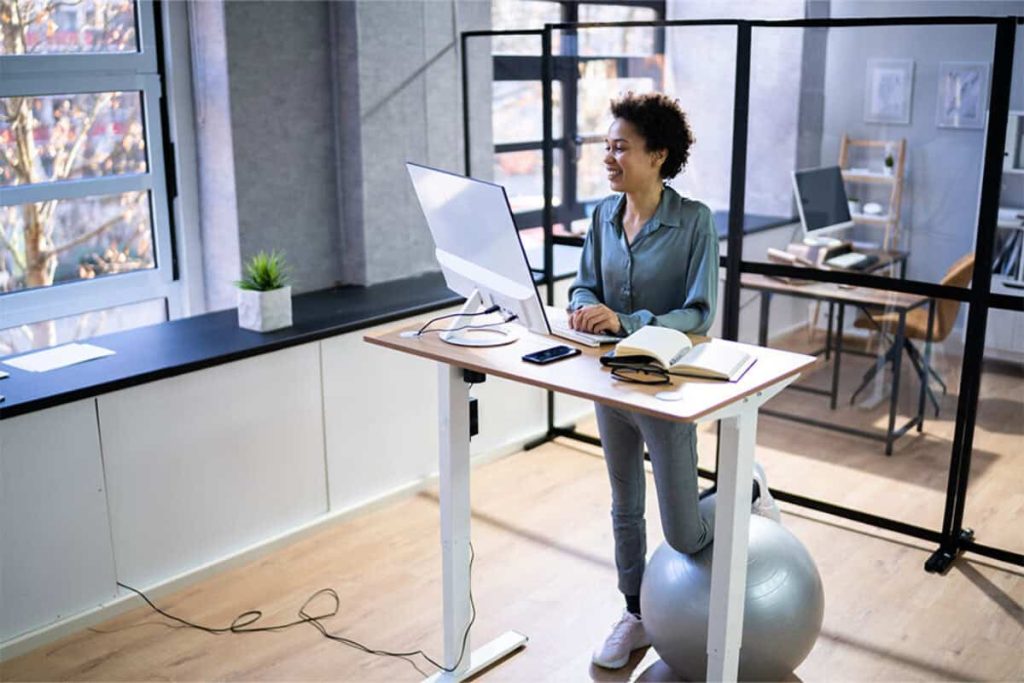
Standing desks are worth it for users who understand how to use them effectively. They are not a cure-all, but they provide a tool for reducing prolonged sitting and introducing more movement into the workday. For individuals who spend long hours at a desk, this can lead to meaningful improvements in comfort and energy levels.
Frequently Asked Questions
How long should you stand at a desk?
Most people benefit from alternating every 30 to 60 minutes. The goal is to avoid staying in one position long enough to create discomfort.
Do standing desks really help posture?
They can, but only when combined with proper setup and awareness. Standing alone does not fix posture.
Can standing desks cause pain?
Yes, especially if used incorrectly or for extended periods without movement.
Are standing desks good for weight loss?
Not significantly. The calorie difference is small, but they help reduce inactivity.