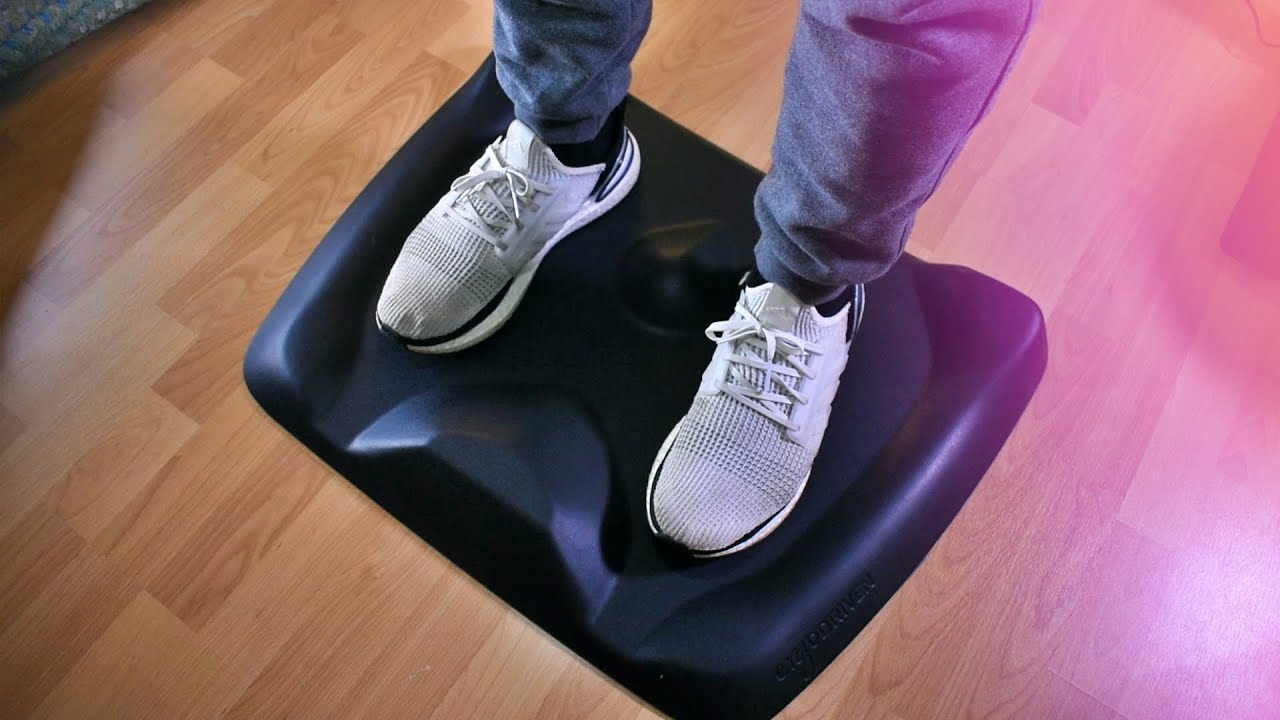
Your Ultimate Guide to Standing Desk Mats for Plantar Fasciitis
Standing desks can improve posture, reduce sedentary time, and help people stay more active during work hours. But for people dealing with plantar fasciitis, standing for long periods can quickly become painful if the setup isn’t properly supported.
The problem usually isn’t the standing desk itself. It’s the surface underneath you. Hardwood floors, tile, laminate, and thin office carpeting place repeated pressure on the heel and arch throughout the day. Over time, that constant pressure aggravates the plantar fascia ligament, especially when the body stays in a static standing position for hours.
A high-quality standing desk mat changes how pressure is distributed across your feet. The right mat reduces heel compression, encourages subtle movement, improves shock absorption, and decreases fatigue in the calves and lower back. But not every anti-fatigue mat works well for plantar fasciitis. Some are too soft and unstable. Others flatten quickly or fail to provide enough support for extended standing sessions.
This guide focuses specifically on standing desk mats that actually work for heel pain and plantar fascia support. Every product listed below is selected based on cushioning quality, material durability, ergonomic design, standing comfort, and long-term support.
Which is the Top One?
Editor's Choice 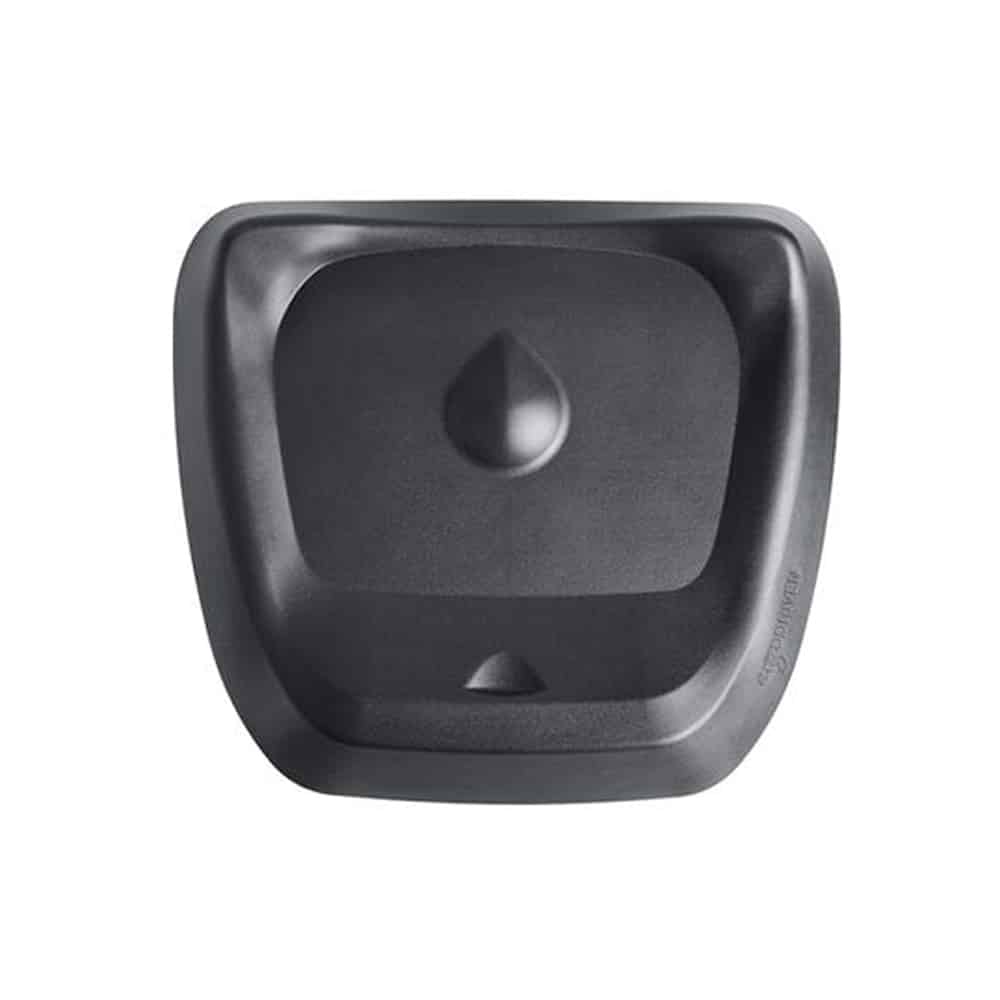 Best Overall | 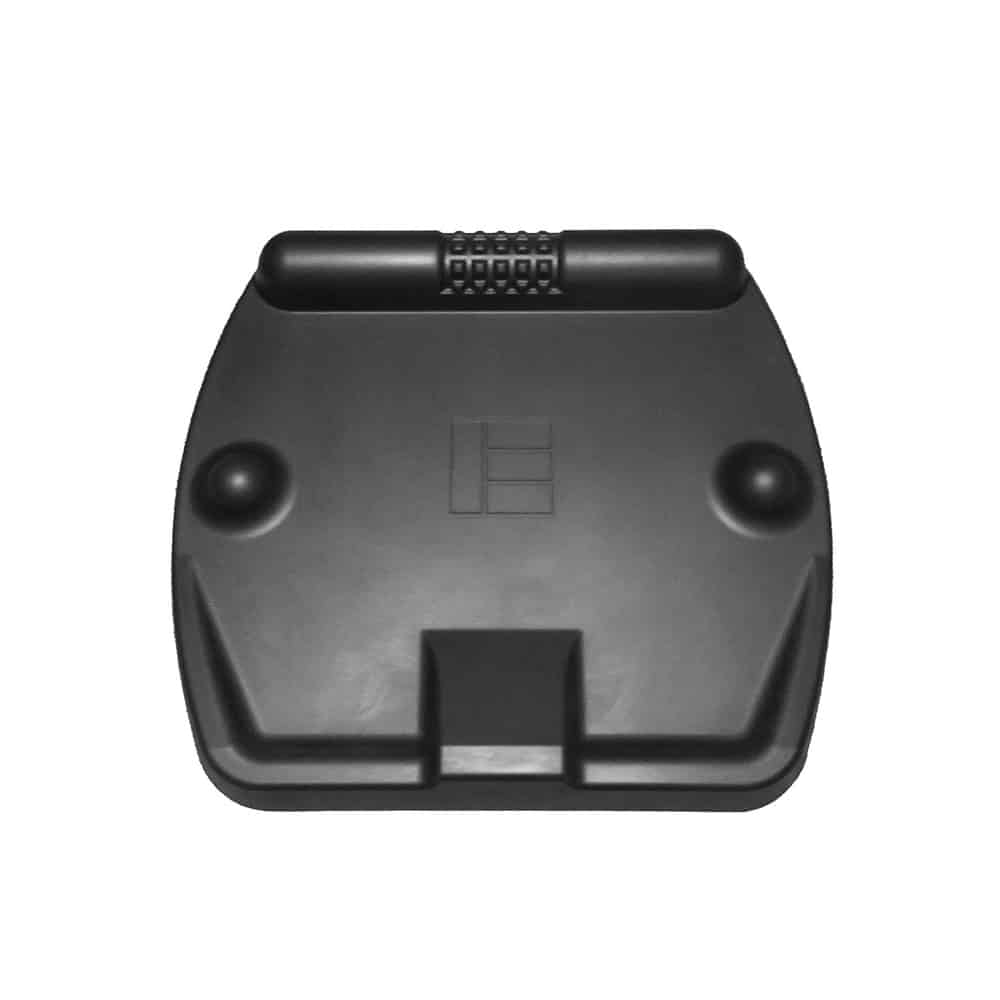 Best for Active Standing | 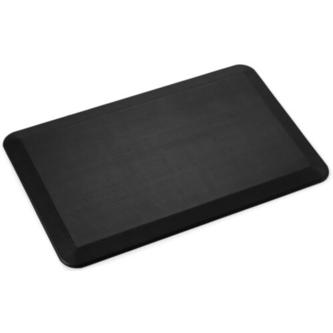 Best Budget Option |
Ergodriven Topo Comfort MatThe best overall choice for plantar fasciitis because it combines supportive cushioning with movement-focused terrain that reduces static pressure on the heel and arch. | CubeFit TerraMatDesigned for users who shift positions frequently and want multiple standing surfaces that reduce foot fatigue during long workdays. | ComfiLife Anti Fatigue Floor MatA strong entry-level option that provides reliable cushioning and heel pressure relief without premium pricing. |
Functionality: ⭐⭐⭐⭐⭐ Quality: ⭐⭐⭐⭐⭐ Price: ⭐⭐⭐⭐ | Functionality: ⭐⭐⭐⭐⭐ Quality: ⭐⭐⭐⭐⭐ Price: ⭐⭐⭐⭐ | Functionality: ⭐⭐⭐⭐ Quality: ⭐⭐⭐⭐ Price: ⭐⭐⭐⭐⭐ |
Let’s Go Over Each One
#1: Ergodriven Topo Comfort Mat
Functionality: ⭐ ⭐ ⭐ ⭐ ⭐
Quality: ⭐ ⭐ ⭐ ⭐ ⭐
Price: ⭐ ⭐ ⭐ ⭐
The Topo Mat consistently stands out because it approaches anti-fatigue support differently from traditional flat mats. Instead of relying purely on thick cushioning, it uses varied terrain zones that encourage constant micro-movements while standing. That distinction matters more than most people realize.
One of the biggest problems with plantar fasciitis during standing desk use is static loading. When your feet remain in the same position for extended periods, pressure repeatedly accumulates in the heel and along the plantar fascia. The Topo reduces this by naturally encouraging users to shift posture throughout the day.
The raised massage mound, angled ramps, and varied elevation points help redistribute tension across the feet and calves. Many users unconsciously move more while using it, which improves circulation and reduces stiffness.
Its polyurethane construction also strikes a better balance than ultra-soft foam mats. Extremely soft mats can feel comfortable at first, but often create instability that forces the foot muscles to overwork. The Topo maintains support while still offering enough cushioning to reduce heel impact.
For users working 6–8-hour standing sessions, this balance becomes extremely important.
Pros and Cons of the Ergodriven Topo Comfort Mat
| Pros | Cons |
|---|---|
| ✔️ Made with durable material ✔️ Comfortable ✔️ Easy to clean | ✖️ Pricey ✖️ Can be a tripping hazard |
#2: CubeFit TerraMat
Functionality: ⭐ ⭐ ⭐ ⭐ ⭐
Quality: ⭐ ⭐ ⭐ ⭐ ⭐
Price: ⭐ ⭐ ⭐ ⭐
The TerraMat focuses heavily on movement-based ergonomics. Instead of functioning like a traditional anti-fatigue pad, it acts almost like an active standing platform.
For plantar fasciitis sufferers, this can significantly reduce the repetitive heel pressure associated with static standing.
The mat includes multiple support zones, including ramps, massage ridges, balance areas, and elevated support sections. These features encourage frequent shifts in posture and foot positioning, which help prevent prolonged strain on the same tissue areas.
Another advantage is calf engagement. Subtle movement while standing activates the lower leg muscles more consistently, which can reduce stiffness around the Achilles tendon and plantar fascia.
The firmness level is also well-calibrated. It doesn’t sink excessively under body weight, which makes it particularly useful for heavier users or people who dislike overly soft foam mats.
The downside is that it requires more active use. People who prefer standing completely still may not benefit from the terrain-focused design as much.
Pros and Cons of the CubeFit TerraMat
| Pros | Cons |
|---|---|
| ✔ Comes with 3D active features as well as a flat surface ✔ Slides easily from under your desk and back in ✔ 100% lifetime warranty ✔ Shock-absorbent material | ✘ Pricey compared to its competitors ✘ A little too big for those with a smaller frame ✘ Massage mounds are too soft |
#3: ComfiLife Anti-Fatigue Floor Mat
Functionality: ⭐ ⭐ ⭐ ⭐
Quality: ⭐ ⭐ ⭐ ⭐
Price: ⭐ ⭐ ⭐ ⭐ ⭐
The ComfiLife mat delivers far better support than most inexpensive anti-fatigue mats. While it doesn’t include advanced terrain features, it performs well in the areas that matter most for plantar fasciitis relief.
Its high-density foam core provides moderate cushioning without becoming overly unstable. That’s important because many low-cost mats rely on ultra-soft foam that compresses heavily under body weight. Over time, those mats lose structure and create inconsistent support.
The ComfiLife maintains better pressure distribution while remaining comfortable for prolonged standing.
This makes it especially useful for remote workers, hybrid office users, first-time standing desk owners, and people transitioning gradually into standing work.
The beveled edges also reduce tripping risk, which becomes important in home office setups where mats frequently shift during chair movement.
It’s not as durable as premium polyurethane models, but for the price, it offers excellent overall value.
Pros and Cons of the ComfiLife Anti-Fatigue Floor Mat
| Pros | Cons |
|---|---|
| ✔ Stain-repellent skin ✔ Thick cushioning foam provide more comfort ✔ Material prevents slipping ✔ Economical price ✔ Full lifetime warranty | ✘ No varied terrain to encourage movement ✘ Heat sensitive |
#4: Kangaroo Original Standing Mat

Functionality: ⭐ ⭐ ⭐ ⭐
Quality: ⭐ ⭐ ⭐
Price: ⭐ ⭐ ⭐ ⭐ ⭐
The Kangaroo Mat has become popular because it balances affordability with surprisingly effective cushioning performance. Although it’s often marketed for kitchens, many standing desk users with heel pain prefer it because of its softer feel underfoot. For shorter standing intervals, the comfort level is excellent.
However, this softer cushioning creates a tradeoff. Users with severe plantar fasciitis may eventually notice that the foam compresses unevenly during extended standing sessions. This can create instability around the arch and heel over time.
That doesn’t make it a bad mat. It simply means it performs best for moderate use rather than all-day standing. People transitioning into standing desk work often appreciate this softer feel initially because it reduces the harsh shock associated with tile or hardwood floors.
Pros and Cons of the Kangaroo Original Standing Mat
| Pros | Cons |
|---|---|
| ✔ Available in multiple colors ✔ Extra thick ✔ Can be used anywhere ✔ Non-toxic | ✘ People may easily trip over ✘ May scratch easily |
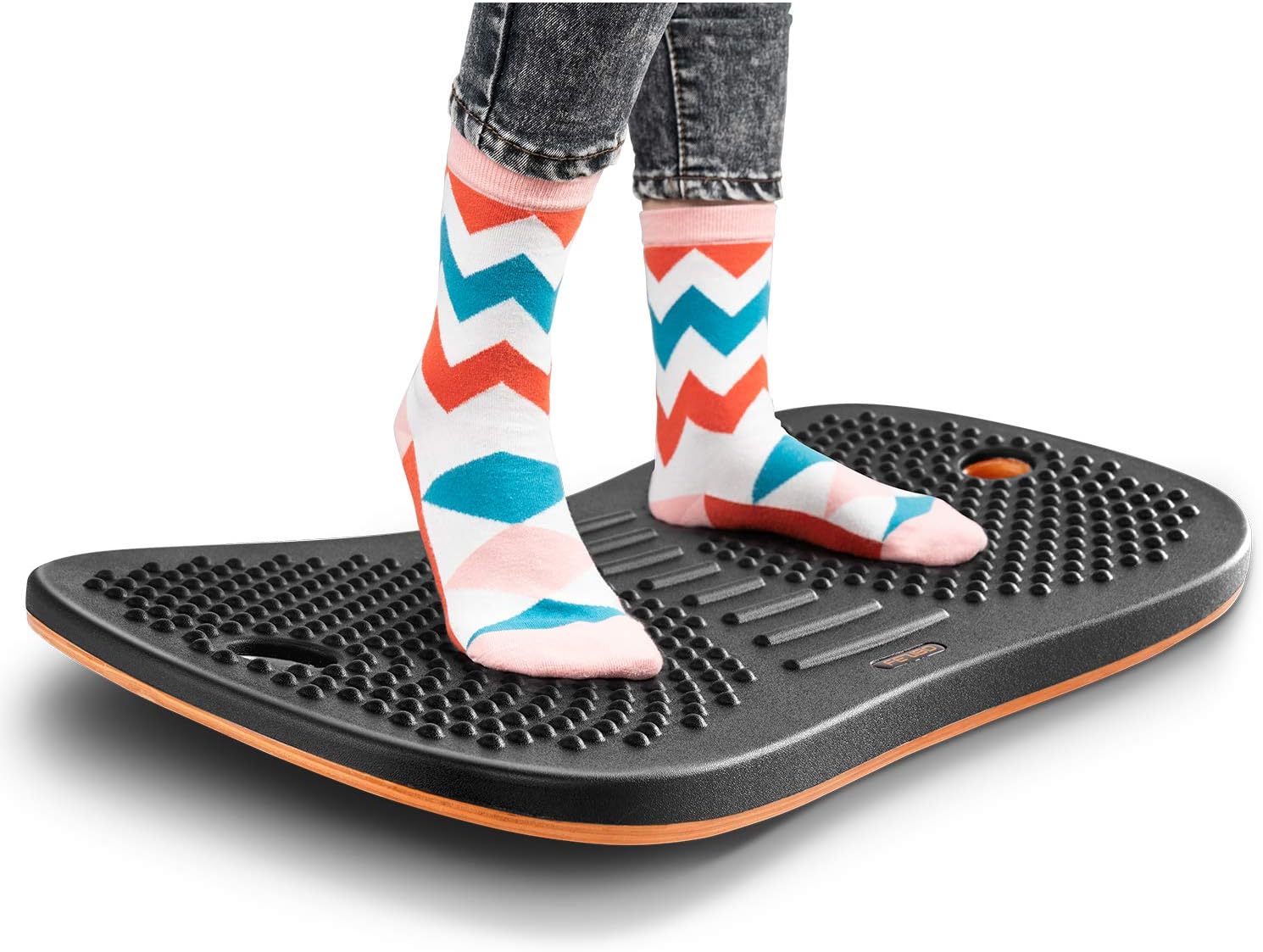
#5: FEZIBO Standing Desk Mat
Functionality: ⭐ ⭐ ⭐ ⭐
Quality: ⭐ ⭐ ⭐ ⭐
Price: ⭐ ⭐ ⭐ ⭐
The FEZIBO mat targets office ergonomics specifically and offers a middle-ground experience between flat comfort mats and movement-focused ergonomic mats.
Its cushioning density is firmer than many memory foam competitors, which benefits users who need more heel stability. It also includes subtle texture zones that encourage small foot adjustments without feeling overly aggressive.
For plantar fasciitis sufferers, this balance can help reduce fatigue while avoiding the instability associated with extremely soft mats. The surface texture also improves grip when wearing socks or softer office shoes.
Durability is respectable for the price category, though it still doesn’t match the lifespan of premium polyurethane mats.
Pros and Cons of the FEZIBO Standing Desk Mat
| Pros | Cons |
|---|---|
| ✔️ Balanced firmness ✔️ Good office ergonomics ✔️ Supportive texture ✔️ Easy maintenance | ✖️ Less premium material quality ✖️ Moderate long-term durability |
Why Standing Desk Mats Matter for Plantar Fasciitis
Plantar fasciitis develops when the ligament running along the bottom of the foot becomes irritated or inflamed from repetitive stress. Standing on hard flooring for prolonged periods increases tension along this tissue, especially near the heel attachment point.
Standing desks can unintentionally worsen this if users suddenly increase standing time without improving floor support. Most floors provide almost no shock absorption. Hardwood, laminate, and tile transfer pressure directly into the heel during prolonged standing. Over time, the plantar fascia remains under continuous tension, especially when the calves tighten, and body weight shifts forward.
A proper standing desk mat changes how those forces move through the foot. The best mats reduce localized heel compression while still maintaining enough stability for posture control. They also encourage small movements that improve circulation and reduce static loading. That movement component matters more than many people expect.
Static standing is often harder on the body than gentle movement because tissues remain under continuous tension without relief. This is why terrain mats and ergonomic standing surfaces have become increasingly popular among users with chronic heel pain.
What Makes a Standing Desk Mat Good for Heel Pain
Many shoppers assume a thicker mat automatically means better support. That’s not always true for plantar fasciitis. The best standing desk mat should reduce pressure under the heel while keeping your feet stable enough to stand naturally.
Cushioning Should Feel Supportive, Not Too Soft
The ideal mat balances cushioning with stability. A mat that’s too soft may feel comfortable at first, but it can make your feet work harder to stay balanced. Over time, that extra effort can increase foot fatigue and place more tension on the plantar fascia. A better anti-fatigue mat uses high-density materials that absorb pressure without letting your feet sink too much.
Firmness Needs to Stay Consistent
Firmness consistency is just as important as first-touch comfort. Lower-quality foam can develop compression spots after repeated use. Once that happens, the mat no longer distributes your weight evenly, which can reduce support around the heel and arch.
Texture Helps Reduce Static Pressure
Surface texture is another important feature. Slight movement prompts, raised areas, or varied standing zones help you shift your feet naturally throughout the day. This reduces repetitive pressure on the same parts of the heel and arch while supporting better circulation.
Material Quality Affects Long-Term Comfort
Material quality also matters. Polyurethane mats usually last longer than cheaper memory foam mats because they resist flattening and compression better. For users who stand for multiple hours a day, that durability becomes especially important.
Memory Foam vs Polyurethane for Plantar Fasciitis
Memory foam feels softer initially, which explains why many budget mats rely heavily on it. But softer doesn’t always translate into better ergonomic support. Memory foam tends to compress more aggressively under sustained weight. Over time, this can create instability and inconsistent support patterns that worsen foot fatigue.
Polyurethane performs differently. High-quality polyurethane mats maintain their structure longer while still providing cushioning. They distribute pressure more evenly and recover shape faster after compression. This makes them particularly useful for:
- Heavier users
- Long standing sessions
- Chronic heel pain
- Daily office use
Polyurethane mats also typically last several years longer before flattening becomes noticeable. For plantar fasciitis sufferers, that structural consistency often matters more than plush softness.
How to Use a Standing Desk Without Making Plantar Fasciitis Worse
Even the best anti-fatigue mat can’t fully compensate for poor standing habits. If you’re dealing with plantar fasciitis, the way you use your standing desk matters just as much as the equipment itself.
Don’t Increase Standing Time Too Quickly
One of the biggest mistakes people make is switching from full-time sitting to several hours of standing immediately. That sudden increase in load places significant strain on the calves, Achilles tendon, and plantar fascia.
A gradual transition works much better. Most ergonomic specialists recommend alternating between sitting and standing every 30 to 60 minutes when starting out. This allows the feet and lower legs to adapt without overwhelming already irritated tissue.
Wear Supportive Shoes While Standing
Footwear plays a major role in managing heel pain. Standing barefoot on an anti-fatigue mat may feel comfortable for short periods, but supportive shoes usually provide better long-term relief during extended standing sessions. Shoes with proper arch support and cushioning help reduce stress on the plantar fascia while improving weight distribution across the foot.
Adjust Desk Height Properly
Desk height is another commonly overlooked factor. If the desk sits too high, many users lean forward or shift excess pressure toward the front of the foot. Over time, this creates additional strain throughout the heel and arch.
Keeping the elbows at roughly a 90-degree angle helps maintain better posture alignment and reduces unnecessary tension throughout the lower body.
Keep Moving Throughout the Day
Movement remains essential, even with a high-quality standing mat. Small calf raises, gentle weight shifts, and short walking breaks help improve circulation while reducing stiffness in the feet and lower legs. Standing completely still for hours at a time can still aggravate plantar fasciitis, even if the floor surface is well-cushioned.
Common Mistakes People Make With Standing Desk Mats
Many people buy a standing desk mat expecting instant relief, but several common mistakes can limit its effectiveness.
Using Kitchen Mats Instead of Ergonomic Office Mats
One major issue is choosing mats designed for kitchens rather than office ergonomics. Kitchen mats are typically built for softer short-term comfort, while ergonomic office mats focus more on posture stability and prolonged standing support. That difference becomes important for people managing chronic heel pain during full workdays.
Choosing Excessively Thick Mats
Another common mistake is buying mats that are too thick or overly soft. While plush cushioning may feel appealing initially, excessive softness can destabilize the foot and force the muscles to work harder for balance. Over time, this may increase fatigue rather than reduce it.
Ignoring Footwear Support
Even premium anti-fatigue mats perform poorly when paired with unsupportive shoes. Flat footwear or standing barefoot for long periods can place additional stress on the plantar fascia, especially on hard flooring surfaces. Supportive shoes remain an important part of any standing desk setup for heel pain relief.
Standing Too Long Too Soon
Many users also underestimate how much standing time affects recovery. Standing for six to eight hours immediately after buying a standing desk often leads to symptom flare-ups. Gradual progression works far better than forcing long standing sessions too quickly.
Forgetting to Alternate Movement
Finally, some people treat standing as inherently healthier than sitting and remain in one position for too long. In reality, plantar fasciitis recovery usually improves when movement varies throughout the day. Alternating between sitting, standing, stretching, and walking helps reduce repetitive strain and improves overall comfort during work hours.
Are Expensive Anti-Fatigue Mats Worth It?
In many cases, yes. Premium mats generally use denser materials with better compression resistance. They maintain support longer, distribute pressure more evenly, and reduce fatigue more effectively during extended standing sessions.
Cheaper mats often feel comfortable initially but lose structural integrity within months of regular use. This becomes especially noticeable for users with plantar fasciitis because small support inconsistencies can significantly affect heel pain over time.
That said, not everyone needs a $150 ergonomic terrain mat. Users standing 1–3 hours daily may do perfectly well with mid-range options like ComfiLife or FEZIBO. But users standing 6–8 hours regularly usually benefit from investing in higher-end polyurethane ergonomic mats. Long-term durability frequently offsets the higher upfront cost.
Frequently Asked Questions
Can a standing desk mat help plantar fasciitis?
Yes, a good anti-fatigue mat can significantly reduce heel strain by improving pressure distribution and decreasing shock transfer from hard flooring surfaces. Mats also encourage subtle movement, which helps reduce static loading on the plantar fascia. However, the mat works best when combined with supportive footwear, gradual standing intervals, and proper desk ergonomics.
What firmness is best for plantar fasciitis?
Moderate firmness is usually ideal. Extremely soft mats may create instability that increases muscular fatigue, while overly hard mats fail to absorb enough pressure. High-density polyurethane mats generally provide the best balance between cushioning and structural support.
Are thicker anti-fatigue mats better?
Not always. Very thick mats can destabilize the feet and force the muscles to work harder for balance. Material quality and density matter more than thickness alone. A thinner high-density mat often performs better than a thick low-density foam mat.
Should you wear shoes on a standing desk mat?
For most people with plantar fasciitis, yes. Supportive shoes reduce strain on the plantar fascia more effectively than barefoot standing during long work sessions. Shoes with good arch support and cushioning usually improve comfort significantly.
How long should you stand with plantar fasciitis?
It depends on symptom severity and conditioning level, but most users benefit from alternating positions every 30–60 minutes. Standing continuously for several hours often worsens inflammation, especially during early recovery stages.
Can standing desks worsen plantar fasciitis?
Yes, especially when users increase standing duration too aggressively or stand on hard flooring without proper support. The issue usually comes from prolonged static standing rather than the desk itself. Proper mat selection, posture, footwear, and movement habits greatly reduce this risk.
Editor’s Choice
Ergodriven Topo Comfort Mat
The Topo Comfort Mat earns the best overall recommendation because it solves multiple ergonomic problems simultaneously instead of focusing only on softness.
Its terrain-based design encourages constant micro-movement, which helps reduce static heel pressure throughout the day. The polyurethane construction provides long-term support without the instability associated with overly soft foam mats, and the varied standing positions help improve circulation while reducing fatigue.
For users with plantar fasciitis who spend several hours daily at a standing desk, it consistently delivers one of the best balances between cushioning, support, movement, and durability.