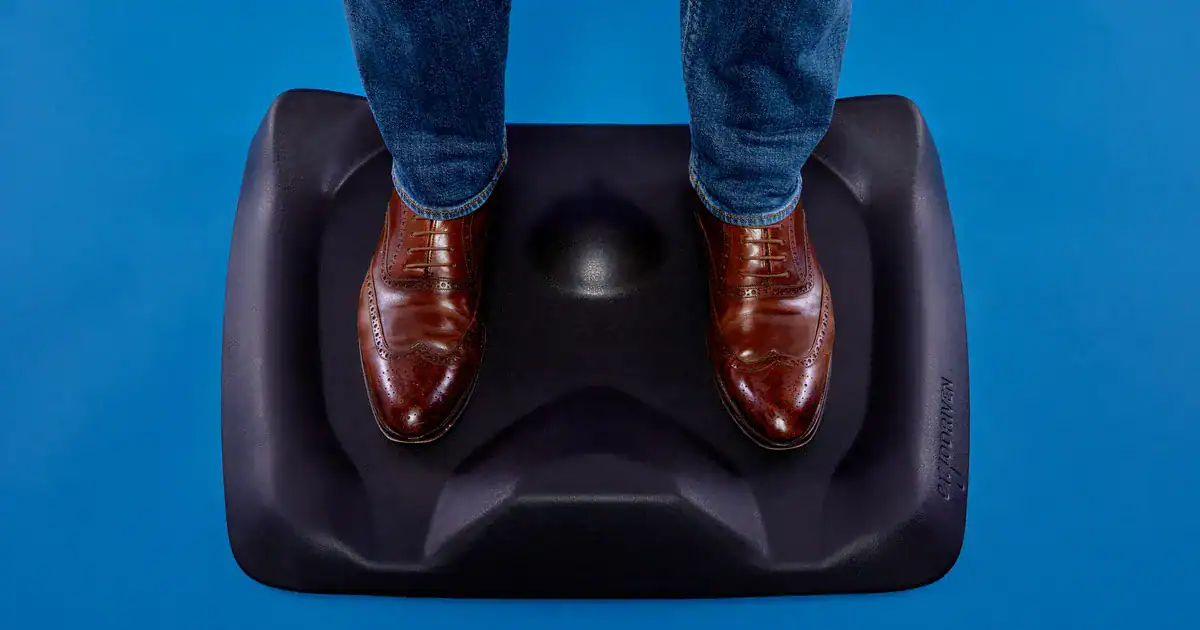
Standing desks have changed how people work, but they only solve half the problem. The moment you start standing for longer periods, a new issue appears: discomfort from hard flooring. That’s where standing desk mats come in. These mats are designed to reduce fatigue, improve comfort, and support healthier movement while standing at your desk.
But not all mats are created equal, and simply buying one doesn’t guarantee a better experience. This guide breaks down everything you need to know about standing desk mats: what they are, how they work, which types exist, what features matter, how to use them properly, and whether they’re actually worth it. If you’re building a pain-free workstation, this is where you start.
What Is a Standing Desk Mat?
A standing desk mat, often called an anti-fatigue mat, is a cushioned surface placed under your feet while standing at a desk. Its main purpose is simple: reduce the physical strain caused by standing on hard floors like tile, wood, or concrete.
When you stand on a rigid surface, your muscles remain relatively static. Over time, this leads to fatigue, soreness, and discomfort in areas like your feet, calves, knees, and lower back. A standing desk mat introduces slight instability and cushioning, encouraging small, constant movements in your legs.
That subtle movement is what makes the difference. Instead of locking your body into a rigid standing position, a mat helps you stay dynamic, even when you’re working at a computer.
Why Standing Desk Mats Matter
Standing desks are often marketed as a solution to sitting too much. And while they do help you reduce sedentary time, they introduce a different challenge: prolonged standing. Without proper support, standing for extended periods can lead to:
- Foot pain and pressure buildup
- Calf fatigue
- Knee discomfort
- Lower back strain
A standing desk mat helps address these issues by distributing pressure more evenly and reducing the load on your joints. More importantly, it promotes movement. The best ergonomic setups are not about choosing between sitting and standing. They’re about avoiding staying in one position for too long. A standing desk mat complements this philosophy by making standing more comfortable and sustainable, so you’re more likely to switch positions throughout the day.
How Standing Desk Mats Work
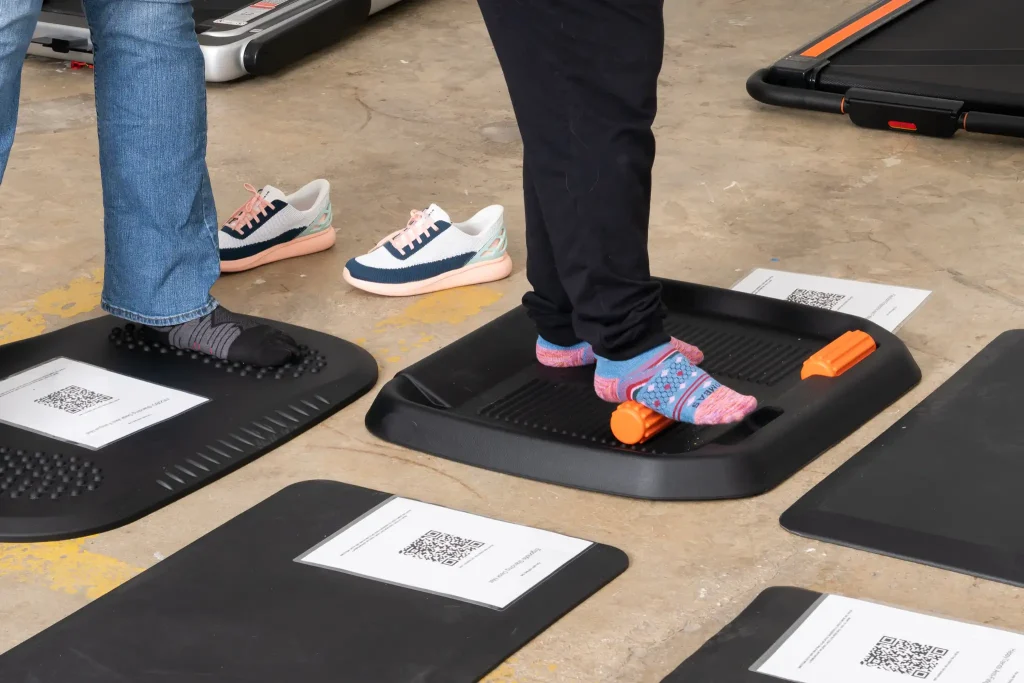
At a surface level, a mat just looks like a soft pad. But its real function is biomechanical. When you stand on a cushioned surface:
- Your leg muscles engage slightly to maintain balance
- Blood circulation improves compared to rigid standing
- Pressure is redistributed across your feet
- Micro-movements reduce static strain
This is why anti-fatigue mats are commonly used in industries where workers stand for long hours, such as retail, manufacturing, and healthcare.
In a desk setup, the same principle applies. But the goal isn’t endurance. It’s comfort and sustainability. A good mat makes standing feel easier, which encourages healthier work habits over time.
Types of Standing Desk Mats
Not all mats are designed the same. Understanding the different types helps you choose one that fits your setup and work style.
Flat Anti-Fatigue Mats
Flat anti-fatigue mats are the most common and straightforward option. They provide a consistent cushioned surface that reduces the pressure of standing on hard floors without adding distractions or complexity. This makes them a strong starting point for most users.
If you’re new to standing desks or prefer a simple setup that doesn’t interfere with your workflow, a flat mat is usually the most practical choice. It works particularly well in traditional office environments or smaller workspaces where you don’t need a lot of movement variety, just reliable comfort that makes standing more sustainable.
Ergonomic / Terrain Mats
Terrain mats take a more active approach to standing. Instead of a flat surface, they incorporate features like raised ridges, angled edges, and textured zones. These elements encourage you to shift your stance throughout the day, which helps prevent the stiffness that comes from standing in one position too long.
This type of mat is better suited for people who stand for longer periods or tend to feel restless when staying still. The added variety makes it easier to keep moving naturally, which is ultimately the goal of a sit-stand setup.
Balance Boards and Active Mats
Balance boards and active mats go beyond comfort and focus more on movement. They introduce a level of instability that forces your body to constantly adjust, engaging your legs and core more actively than traditional mats. This can make standing feel more dynamic and less static, especially during shorter sessions.
However, that same instability can become distracting or fatiguing during deep, focused work. These are best used in moderation or alongside a more traditional mat, rather than as your only standing surface throughout the entire day.
Foldable and Portable Mats
Foldable mats are designed for flexibility rather than performance. They’re useful in setups where space is limited or where your workstation changes frequently, such as shared offices or multi-purpose rooms. The ability to move or store the mat easily becomes the main advantage.
That said, portability often comes with trade-offs. These mats tend to be thinner and less durable, which means they may not provide the same level of long-term support as more robust options. They’re a practical solution for certain situations, but not always the best choice for a permanent workstation.
Benefits of Using a Standing Desk Mat
A standing desk mat is not just an accessory. It plays a key role in making a standing desk setup actually usable long-term.
Improved Comfort
When you stand on a hard surface, your body weight is concentrated into small contact points, mainly your heels and the balls of your feet. Over time, this creates pressure buildup that leads to soreness and the urge to sit down.
A good mat redistributes that pressure more evenly across your feet. It slightly compresses under your weight, which reduces the intensity of those pressure points. The result isn’t just that standing feels softer. It feels less taxing, which is what actually allows you to stay on your feet longer without discomfort creeping in.
Reduced Fatigue
Standing on a rigid floor encourages stillness. Your muscles lock into place to keep you upright, and because there’s no variation in surface, there’s little reason for them to adjust. That’s where fatigue builds.
A standing desk mat introduces just enough instability to keep your muscles lightly engaged. Your calves, ankles, and lower legs make constant micro-adjustments without you noticing. This improves circulation and prevents that heavy, tired feeling that usually comes from standing too long.
Better Posture Support
Posture doesn’t start at your back. It starts at your feet. If your feet are uncomfortable, your body compensates. You shift unevenly, lean into one hip, or subtly bend your knees to relieve pressure. Over time, those small adjustments travel upward, affecting your hips, spine, and shoulders.
A mat stabilizes your base. When your feet feel supported, your weight distributes more evenly, making it easier to maintain a neutral posture without constantly adjusting.
Encourages Movement
The biggest benefit of a standing desk isn’t standing. It’s movement. A mat supports this by making it easier to shift your weight, adjust your stance, or reposition your feet without discomfort. Even small movements, rocking slightly, stepping to one side, or changing foot position, reduce the load on any single area of your body.
Without a mat, people tend to stand rigidly until discomfort forces them to sit. With a mat, movement becomes natural and continuous, which is what actually makes standing sustainable.
Increased Standing Time (In a Good Way)
One of the most common reasons people stop using standing desks is simple: it becomes uncomfortable too quickly. A mat changes that equation.
Instead of standing feeling like an effort you have to maintain, it becomes something you can do without thinking about it. This is what allows you to build a realistic sit-stand routine, where you alternate positions naturally instead of defaulting back to sitting out of discomfort.
What to Look for in a Standing Desk Mat
Choosing the right mat depends on more than just price or appearance.
Thickness and Cushioning
More cushioning doesn’t automatically mean more comfort. A mat that’s too thin won’t absorb enough pressure, which defeats the purpose. But a mat that’s too soft creates instability, forcing your muscles to work harder than necessary and leading to fatigue over time.
The ideal mat has controlled compression. It gives slightly under your weight but doesn’t sink. You should feel supported, not unstable. This balance is what allows you to stand comfortably without over-engaging your legs.
Material Quality
Material affects how the mat performs after weeks and months of use, not just how it feels on day one. Lower-quality foam tends to compress permanently, meaning it flattens over time and loses its support. Higher-quality materials like polyurethane maintain their structure, providing consistent cushioning even with daily use. Rubber mats offer durability and grip, but they’re typically heavier and less forgiving underfoot.
The key is consistency. A mat that performs the same after months of use is far more valuable than one that feels great initially but degrades quickly.
Size and Coverage
Most people underestimate how much they move while standing. If you naturally shift your stance, step side to side, or reposition frequently, a small mat will feel restrictive. You’ll end up stepping off it without realizing, which defeats its purpose.
A larger mat gives you freedom to move without losing support. On the other hand, if your setup is compact and your movement is minimal, a smaller mat may be sufficient. The right size depends less on your desk and more on your movement habits.
Non-Slip Base
A mat should support movement, but it shouldn’t move itself. If the base doesn’t grip the floor properly, the mat can slide or shift as you adjust your stance. This interrupts your workflow and can even become a safety issue over time. A good mat stays anchored while allowing your body to move naturally on top of it. That distinction matters more than most people expect.
Edge Design
Flat, sharp edges can become surprisingly frustrating. They make it harder to step on and off the mat and increase the risk of catching your foot, especially when you’re moving between sitting and standing frequently. Beveled edges solve this by creating a gradual transition between the mat and the floor. It’s a small detail, but one that improves usability every single day.
Surface Texture
Surface texture influences how your feet interact with the mat over time. Smooth surfaces are predictable and less distracting, which makes them better for focused work. Textured or contoured surfaces encourage more movement and can feel more engaging, especially during longer standing sessions.
There’s no universally “better” option here. It depends on whether you prefer a stable, consistent surface or one that encourages more active standing.
How to Use a Standing Desk Mat Properly
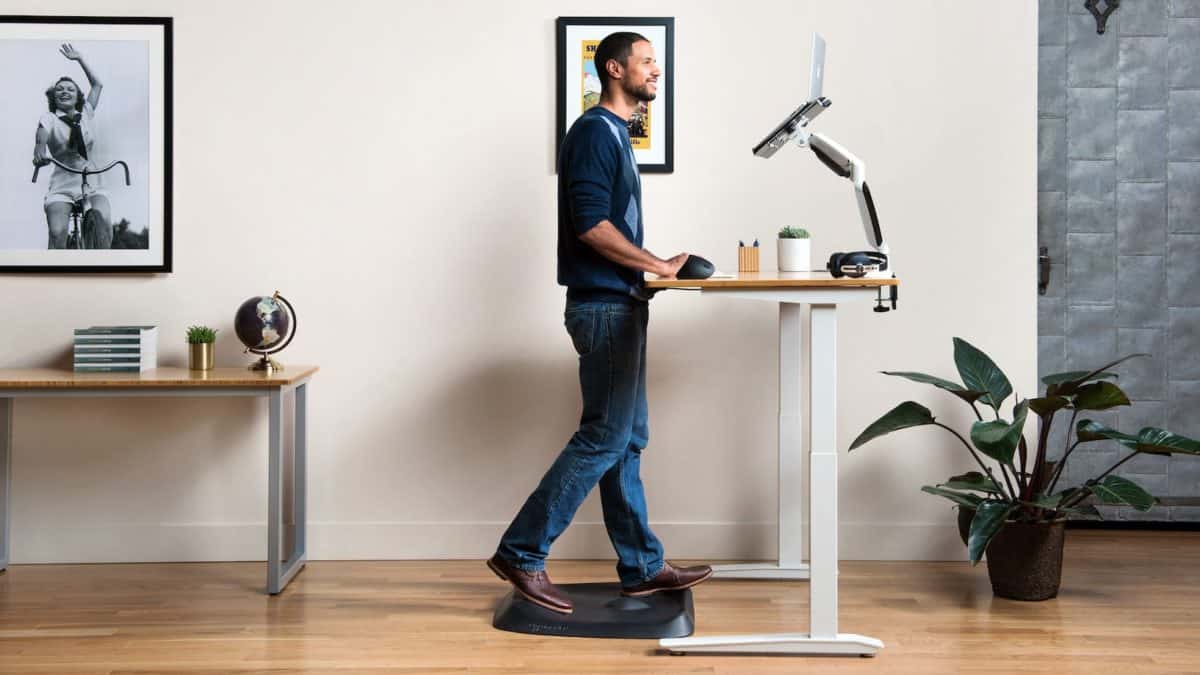
Even the best mat won’t help if your overall setup is poor. Start with your desk height. Your elbows should be around working height, with relaxed shoulders and neutral wrists. Your monitor should sit at eye level, so you’re not looking down or craning your neck upward.
Then focus on your stance. Avoid locking your knees. Keep them slightly bent and shift your weight naturally. Move your feet, change positions, and don’t try to stand perfectly still. A mat works best when you use it as part of a dynamic setup, not as a way to stand rigidly for hours.
Common Mistakes to Avoid
Assuming a Standing Desk Mat Will Fix Everything
One of the biggest misconceptions is that a mat alone will solve discomfort. If your desk height is wrong, your monitor is too low or too high, or your posture is off, a standing desk mat won’t compensate for those issues. It’s a support tool, not a complete ergonomic solution.
Standing Too Long, Too Quickly
It’s common to overcorrect when switching to a standing setup. Many people try to stand for long periods right away, which often leads to soreness and fatigue. Even with a mat, your body needs time to adapt. Building up gradually is far more effective than forcing long standing sessions early on.
Choosing the Cheapest Option Available
Not all mats are created equal. Low-quality mats tend to compress quickly, lose their support, and wear out faster. Instead of improving comfort, they can actually make standing feel worse over time. Investing in a durable, well-built mat usually pays off in both comfort and longevity.
Ignoring Movement While Standing
A standing desk mat is not designed to keep you still. Its real value comes from encouraging subtle movement, shifting weight, adjusting your stance, and staying dynamic. Standing rigidly for long periods defeats the purpose and can lead to the same kind of discomfort as prolonged sitting.
Standing Desk Mats vs No Mat
If you’re using a standing desk without a mat, you’ll likely notice discomfort sooner rather than later. Hard floors create pressure points and limit movement. Over time, this makes standing less appealing, which often leads people back to sitting full-time.
A mat changes that experience. It doesn’t just make standing more comfortable. It makes it sustainable. And that’s what actually matters in the long run.
Are Standing Desk Mats Worth It?
For most people using a standing desk, yes. A standing desk mat is one of the simplest upgrades you can make to improve comfort and usability. It removes one of the biggest barriers to standing, physical discomfort, and makes it easier to maintain a balanced work routine.
If you already have a standing desk, a mat is not optional. It’s part of the setup.
Final Thoughts
A standing desk mat might seem like a small addition, but it has a significant impact on how your workspace feels. Standing desks are about creating flexibility and reducing static strain. Mats support that goal by making standing more comfortable, more dynamic, and more sustainable over time.
If you’re serious about building a pain-free workstation, a standing desk mat is not just a nice extra; it’s a core component. From here, the next step is finding the right one for your needs. Explore our guide to the best standing desk mats to build a setup that works for your body not against it.
Frequently Asked Questions
Do I really need a standing desk mat?
If you stand regularly at your desk, yes. Without a mat, discomfort from hard flooring builds quickly and makes standing less sustainable.
What thickness is best for a standing desk mat?
Most users benefit from medium-thickness mats that provide cushioning without feeling unstable. Extremely thin or overly soft mats tend to be less effective.
Are expensive standing desk mats worth it?
Higher-quality mats often last longer and provide better support. While you don’t need the most expensive option, very cheap mats can wear out quickly.
Can a standing desk mat help with back pain?
It can help reduce strain caused by prolonged standing, but it works best when combined with proper desk setup and posture.
How long should I stand on a mat?
There’s no fixed rule. The goal is to alternate between sitting and standing throughout the day rather than staying in one position for too long.